Introduction
When it comes to protecting critical infrastructure from unauthorized drone incursions, the choice of netting material is one of the most important decisions you will make. The three most widely deployed options — stainless steel, aramid fiber, and HDPE (High-Density Polyethylene) — each offer distinct advantages in terms of strength, weight, weather resistance, and long-term cost. This Anti-Drone Net Materials Comparison guide examines the key specifications, performance characteristics, and practical trade-offs of each material to help you make an informed decision for your specific security application.
Whether you need a permanent perimeter defense system at a military base, a lightweight deployable solution for temporary events, or a corrosion-resistant net for coastal installations, understanding the differences between stainless steel, aramid, and HDPE drone nets is essential. We will compare tensile strength, durability, weight, weather resistance, and installation requirements across all three materials, and also address galvanized steel as a cost-effective alternative to stainless steel.
Overview of Anti-Drone Net Materials
Anti-drone nets are manufactured from several specialized materials, each engineered to meet specific operational requirements. The four primary materials used in anti-drone netting today are stainless steel wire rope, aramid fiber, HDPE (High-Density Polyethylene), and galvanized steel wire. Each material brings a unique combination of physical properties that affect how the net performs in the field.
Stainless Steel Anti-Drone Nets
Stainless steel anti-drone nets are constructed from braided or woven AISI 304 or 316 stainless steel wire rope. These nets offer the highest tensile strength among all anti-drone netting materials, with breaking strengths typically ranging from 1,500 to 3,000 kN/m depending on wire gauge and weave pattern. The primary advantage of stainless steel is its exceptional durability — it can withstand years of exposure to UV radiation, salt spray, rain, and extreme temperatures without degradation. This makes stainless steel the preferred choice for permanent installations in harsh environments such as coastal military facilities, border security perimeters, and critical infrastructure sites that require 24/7/365 protection. Stainless steel drone nets are also highly resistant to cutting and tampering, providing a physical barrier that is difficult to breach.
Aramid Fiber Anti-Drone Nets
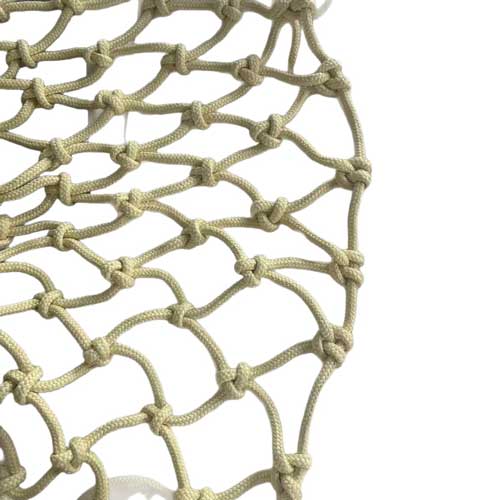
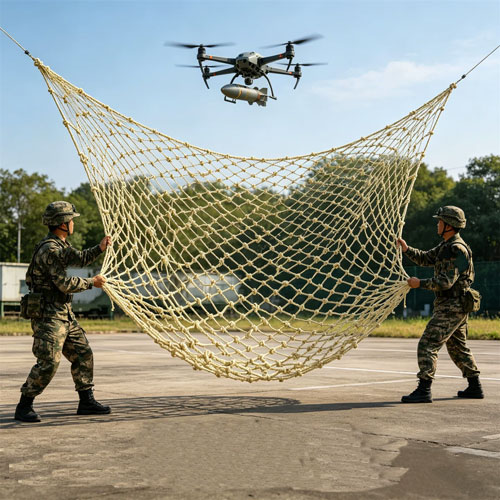
Aramid anti-drone nets are made from high-strength synthetic fibers such as Kevlar or Twaron. As an aramid anti-drone net solution, it delivers excellent strength-to-weight performance — aramid fiber is approximately five times stronger than steel on an equal weight basis, with tensile strength of 600-1,200 kN/m while weighing only 200-400 g/m². This low weight allows for rapid deployment, easy transportation, and installation on structures with limited load-bearing capacity. Aramid nets are commonly used for temporary security deployments, military field operations, VIP protection details, and event security where quick setup and takedown are required. However, aramid fiber can degrade under prolonged direct UV exposure unless protected by a UV-resistant coating, which is an important consideration for long-term outdoor installations.
HDPE Anti-Drone Nets
HDPE drone nets are manufactured from extruded High-Density Polyethylene monofilament or tape yarns, woven into a mesh structure. HDPE is the most economical anti-drone netting material, offering adequate strength for drone interception at a fraction of the cost of aramid or stainless steel. HDPE nets are lightweight (typically 150-300 g/m²), float-resistant, and naturally UV-stabilized when manufactured with appropriate additives. They are widely used for large-area coverage such as airport perimeter protection, prison yard netting, and industrial site security where budget constraints are a primary factor. HDPE is also chemically inert and resistant to moisture, making it suitable for humid or rainy environments. However, HDPE has lower tensile strength compared to aramid and stainless steel, typically in the range of 30-60 kN/m, and is more susceptible to cutting or vandalism.
Galvanized Steel Anti-Drone Nets
Galvanized steel nets offer a middle-ground option between stainless steel and synthetic materials. Made from mild steel wire with a hot-dip galvanized zinc coating, these nets provide good tensile strength (800-1,500 kN/m) at a lower cost than stainless steel. The zinc coating provides corrosion protection, though not to the same level as stainless steel in highly corrosive environments. Galvanized steel nets are commonly used for perimeter security fencing, prison facilities, and industrial sites where the additional cost of stainless steel cannot be justified but where higher strength than synthetic nets is still required. The galvanized coating typically provides 8-15 years of corrosion resistance in most environments before maintenance is needed.
Anti-Drone Net Materials Specifications Comparison
Understanding the technical specifications of each anti-drone net material is essential for making an informed procurement decision. The table below summarizes the key performance parameters across all four material types.
| Specification | Stainless Steel | Aramid Fiber | HDPE | Galvanized Steel |
|---|---|---|---|---|
| Tensile Strength | 1,500 - 3,000 kN/m | 600 - 1,200 kN/m | 30 - 60 kN/m | 800 - 1,500 kN/m |
| Weight | 800 - 1,500 g/m² | 200 - 400 g/m² | 150 - 300 g/m² | 1,000 - 2,000 g/m² |
| UV Resistance | Excellent (inherent) | Moderate (requires coating) | Good (with UV stabilizers) | Excellent (inherent) |
| Corrosion Resistance | Excellent (304/316) | Excellent (chemically inert) | Excellent (chemically inert) | Moderate (zinc coating) |
| Cutting Resistance | Very High | High | Moderate | Very High |
| Lifespan (Outdoor) | 15 - 25+ years | 5 - 10 years | 5 - 12 years | 8 - 15 years |
| Relative Cost | $$$$ (Highest) | $$$ (High) | $ (Lowest) | $$ (Moderate) |
Tensile Strength Comparison
When evaluating the tensile strength of different anti-drone net materials, stainless steel clearly leads the field. A stainless steel wire rope net can achieve tensile strengths of up to 3,000 kN/m, meaning it can withstand tremendous impact forces from fast-moving drones without tearing. This is critical for stopping large commercial or military-grade UAVs that may weigh 25 kg or more and travel at speeds exceeding 100 km/h.
Aramid fiber nets offer respectable tensile strength at 600-1,200 kN/m — sufficient for most consumer and commercial drone threats while being significantly lighter. HDPE nets have the lowest tensile strength at 30-60 kN/m, making them suitable for smaller consumer drones and as a deterrent layer rather than a standalone hard-stop barrier. Galvanized steel sits between stainless steel and aramid in terms of tensile capacity, making it a practical choice for budget-conscious perimeter installations.
Weight and Flexibility
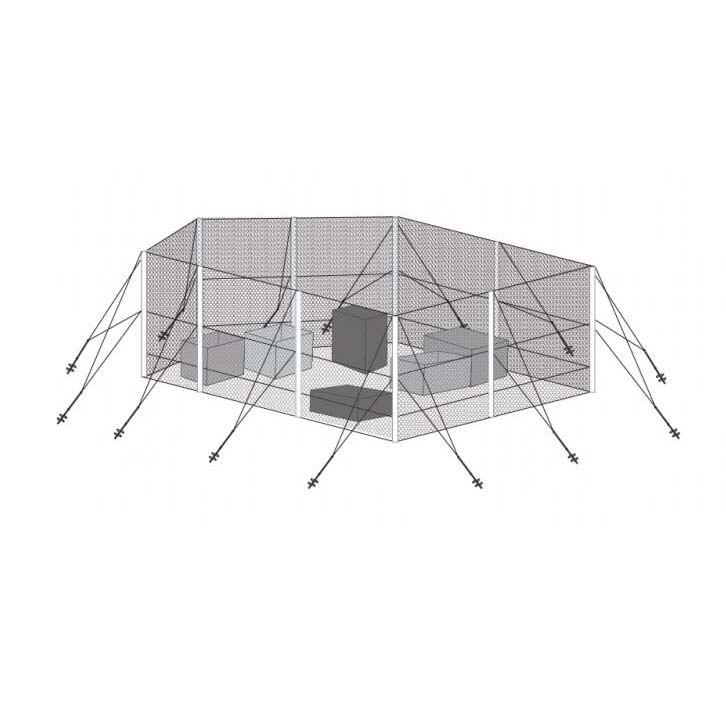
Weight and flexibility are crucial factors when considering installation logistics and structural load requirements. The stainless steel drone net, at 800-1,500 g/m², requires robust support structures — steel poles, concrete foundations, and heavy-duty tensioning hardware. This adds to both material and installation costs but results in a very stable, wind-resistant barrier.
Aramid fiber nets weigh 200-400 g/m², approximately one-quarter the weight of stainless steel for equivalent protective coverage. This dramatically reduces structural requirements and allows installation on existing buildings, fences, or lightweight frames. Aramid nets can also be folded compactly for transport and deployed rapidly in the field.
HDPE nets are the lightest option at 150-300 g/m², offering the easiest handling and most flexible installation options. They can be suspended from existing structures, draped over sensitive areas, or configured as overhead catch nets with minimal engineering.
Galvanized steel is the heaviest option at 1,000-2,000 g/m², requiring the most substantial support infrastructure but offering the highest resistance to wind loads and physical impacts.
Weather Resistance and Durability
The question of which anti-drone net material is most weather-resistant depends heavily on the specific environmental conditions at the installation site. Stainless steel (particularly grade 316) offers the best overall weather resistance, withstanding salt spray, acid rain, UV radiation, and temperature extremes from -40°C to +300°C without significant degradation. This makes it the material of choice for offshore platforms, coastal military bases, and desert installations.
Aramid fiber is naturally resistant to moisture and chemicals but requires UV protection. Standard aramid nets have a 5-10 year outdoor lifespan before UV degradation becomes significant, though UV-stabilized coatings can extend this to 10-12 years. Aramid also performs well at extreme temperatures, maintaining its mechanical properties from -50°C to +200°C.
HDPE offers good weather resistance when properly formulated with UV stabilizers and antioxidants. It is unaffected by moisture, salt water, and most chemicals. However, HDPE becomes brittle at temperatures below -20°C and may soften in extreme heat above 80°C. Expected outdoor lifespan is 5-12 years depending on UV exposure intensity.
Galvanized steel provides moderate weather resistance limited primarily by the zinc coating thickness. In most inland environments, galvanized steel nets last 8-15 years before rust begins to appear. In coastal or industrial environments with airborne corrosives, the lifespan may be reduced to 5-8 years without additional protective coatings.
Stainless Steel vs Aramid: Which Material Is Best?
One of the most common questions in anti-drone net materials comparison is whether stainless steel or aramid is the better choice. The answer depends entirely on your specific application requirements.
Choose stainless steel when:
- The installation is permanent and requires 15-25+ years of service life
- The site is in a harsh environment (coastal, desert, industrial) with high corrosion risk
- You need maximum cutting and tamper resistance for high-security applications
- Large or high-speed drones (commercial/military grade) are part of the threat model
- Supporting infrastructure (steel poles, foundations) can be installed
- Budget allows for higher upfront material costs
Choose aramid when:
- Rapid deployment and mobility are required (military field ops, temporary events)
- Weight restrictions exist on the supporting structure or roof
- You need a high strength-to-weight ratio for equivalent protection
- Installation must be completed quickly with minimal heavy equipment
- The application involves concealed or cosmetic-sensitive environments
- You require a non-metallic solution (e.g., near electrical installations)
In terms of performance comparison, stainless steel offers roughly 2-3 times the absolute tensile strength of aramid, but aramid delivers approximately 5 times better strength-to-weight ratio. For a fixed perimeter protection scenario where weight is not a constraint, stainless steel is generally the superior choice for long-term value. For mobile or temporary deployments where weight and packability matter, aramid is the clear winner.
It is also worth considering hybrid approaches: some installations use a stainless steel perimeter fence with aramid overhead netting, combining the cutting resistance of steel with the lightweight coverage of aramid for horizontal surfaces.
HDPE vs Aramid: Key Differences for Drone Netting
When comparing HDPE vs aramid for drone netting, the primary differentiators are cost, strength, weight, and longevity. Both materials are synthetic and chemically inert, but they serve very different market segments.
| Factor | HDPE | Aramid |
|---|---|---|
| Cost per m² | $ (Lowest) | $$$ (3-5x HDPE) |
| Tensile Strength | 30-60 kN/m | 600-1,200 kN/m (10-20x HDPE) |
| Weight | 150-300 g/m² | 200-400 g/m² |
| Cutting Resistance | Moderate — can be cut with tools | High — very difficult to cut manually |
| UV Lifespan | 5-12 years | 5-10 years (coated) |
| Application | Large area, budget-sensitive, low-threat | High-security, military, critical infrastructure |
HDPE is best suited for applications where the primary goal is drone deterrence and interception of smaller consumer drones (DJI Mavic, Phantom, Autel, etc.) in a controlled environment. Prisons, airports, and industrial facilities with large perimeters often choose HDPE for its cost-effectiveness when covering extensive areas. The lower strength of HDPE is acceptable when the net is deployed as part of a layered security system with other detection and response measures.
Aramid, with its 10-20 times higher tensile strength, is designed for scenarios where drone interception is critical and the threat includes heavier, faster, or military-grade UAVs. The higher cost of aramid is justified by its superior stopping power, lighter weight, and flexibility in deployment.
For organizations with limited budgets, a hybrid approach can work well: use HDPE drone nets for large perimeter areas where the threat level is lower, and upgrade to aramid around the most sensitive internal assets or high-value targets.
Galvanized Steel vs Stainless Steel Drone Nets
Understanding the difference between galvanized steel and stainless steel drone nets is important for buyers who need the strength of metal but are working within budget constraints. While both materials offer excellent tensile strength and cutting resistance, they differ significantly in corrosion performance and long-term cost.
Material composition: Stainless steel drone nets are made from AISI 304 or 316 alloys containing 18-20% chromium and 8-12% nickel, which forms a self-healing passive oxide layer that prevents rust. Galvanized steel nets are made from standard carbon steel wire coated with a layer of zinc (typically 40-100 µm thick) through a hot-dip galvanizing process.
Corrosion performance: The fundamental difference is corrosion resistance. Stainless steel (especially grade 316 with molybdenum addition) offers superior resistance to chloride-induced corrosion, making it suitable for marine and coastal environments. Galvanized steel relies on sacrificial protection from the zinc coating — once the zinc layer is consumed (through oxidation or mechanical damage), the underlying steel begins to rust.
Mechanical properties: Both materials offer similar tensile strength ranges on a per-gauge basis, though stainless steel typically retains its strength better at elevated temperatures and after years of exposure. Galvanized steel may experience some strength reduction over time as the zinc coating degrades and the steel begins to corrode.
Cost comparison: Galvanized steel nets typically cost 40-60% less than equivalent stainless steel nets upfront. However, when calculating total cost of ownership over a 15-20 year period, stainless steel often becomes more economical because it requires no maintenance, repainting, or replacement. Galvanized steel may need spot repairs or replacement after 8-15 years depending on environmental conditions.
Which to choose? For permanent installations in normal inland environments where budgets are constrained, galvanized steel nets provide excellent value. For coastal installations, chemical plants, or any environment with high humidity or airborne corrosives, stainless steel is the recommended choice despite its higher initial cost. For temporary installations (3-5 years), galvanized steel offers a lower upfront investment with acceptable lifespan.
How to Choose the Right Material for Your Anti-Drone Net
How to choose the right material for your anti-drone net requires a systematic evaluation of your operational environment, threat profile, budget, and installation constraints. Use the following decision framework to identify the optimal material for your specific needs.
Step 1: Assess Your Threat Environment
The type and size of drones you expect to intercept will dictate the minimum required tensile strength:
- Consumer drones (DJI Mavic, Phantom, Autel): 0.5-2 kg — HDPE or lightweight aramid nets are sufficient for interception
- Commercial drones (agricultural, delivery, industrial): 5-25 kg — aramid or lightweight stainless steel recommended
- Military-grade UAVs: 25+ kg at high speed — stainless steel or heavy-gauge aramid required for reliable stopping
Step 2: Evaluate Installation Environment
- Coastal or marine environments: Stainless steel 316 is mandatory for corrosion resistance. Aramid and HDPE are also acceptable as non-metallic alternatives.
- Desert or high-UV environments: Stainless steel offers the best UV resistance. UV-stabilized aramid or HDPE are acceptable alternatives with expected 5-10 year lifespans.
- Urban or industrial areas: All materials perform adequately. The choice depends more on budget and structural constraints.
- Temporary or mobile deployments: Aramid or HDPE are preferred for their light weight and ease of transport.
Step 3: Consider Structural and Installation Constraints
- Existing structures vs. new builds: Retrofitting an anti-drone net onto an existing building requires lightweight materials (aramid or HDPE) to avoid exceeding load ratings. New construction can accommodate heavy stainless steel or galvanized steel with proper foundations.
- Span length: Larger unsupported spans between poles favor lighter materials (aramid, HDPE) to reduce sagging and tension requirements.
- Ground conditions: Rocky or difficult terrain makes heavy pole foundations for steel nets more expensive, potentially favoring synthetic options.
Step 4: Analyze Total Cost of Ownership
When comparing material costs, look beyond the initial purchase price:
- HDPE: Lowest upfront cost. Replacement may be needed after 5-12 years. Minimal maintenance required.
- Aramid: Moderate-to-high upfront cost. 5-10 year lifespan with UV protection. Light weight reduces installation labor costs.
- Galvanized steel: Moderate upfront cost. 8-15 year lifespan. May require spot repairs. Heavy weight increases installation costs.
- Stainless steel: Highest upfront cost. 15-25+ year lifespan with zero maintenance. Highest total installation cost due to weight and structural requirements.
Decision Matrix
| Use Case | Recommended Material | Rationale |
|---|---|---|
| Coastal military base | Stainless Steel 316 | Maximum corrosion resistance and strength |
| Temporary VIP protection | Aramid Fiber | Lightweight, rapid deployment, high strength |
| Airport perimeter (large area) | HDPE or Galvanized Steel | Cost-effective coverage of large perimeters |
| Prison facility | Galvanized or Stainless Steel | Maximum cutting and tamper resistance |
| Industrial plant (inland) | Galvanized Steel | Best balance of strength and cost |
| Rooftop installation | Aramid or HDPE | Lightweight, no structural reinforcement needed |
| Large-scale event security | HDPE | Lowest cost for single-use or temporary deployment |
Conclusion
Choosing the right material for your anti-drone net is a balance of strength, weight, durability, and cost. This Anti-Drone Net Materials Comparison has examined the four primary options — stainless steel, aramid fiber, HDPE, and galvanized steel — across the specifications that matter most for real-world security deployments.
To summarize the key findings:
- Stainless steel offers the highest tensile strength (1,500-3,000 kN/m), best weather resistance, and longest lifespan (15-25+ years), making it ideal for permanent high-security installations in harsh environments.
- Aramid fiber provides excellent strength-to-weight ratio with tensile strength of 600-1,200 kN/m at one-quarter the weight of steel, perfect for mobile or weight-sensitive deployments.
- HDPE is the most economical option (30-60 kN/m) for large-area coverage where budget is paramount and the drone threat is limited to smaller consumer UAVs.
- Galvanized steel bridges the gap between synthetic and stainless steel, offering solid tensile strength (800-1,500 kN/m) at 40-60% lower cost than stainless steel, ideal for inland perimeter installations.
Remember that no single material is universally superior — the best choice depends on your specific threat environment, installation constraints, and budget. For complex projects, consider a hybrid approach that combines different materials for different zones: stainless steel for critical asset protection, aramid for overhead coverage, and HDPE for large perimeter areas.
If you need assistance selecting the optimal anti-drone net material for your project, our technical team can provide detailed specifications, sample material swatches, and a custom installation plan tailored to your requirements. Contact us for a consultation.