Introduction
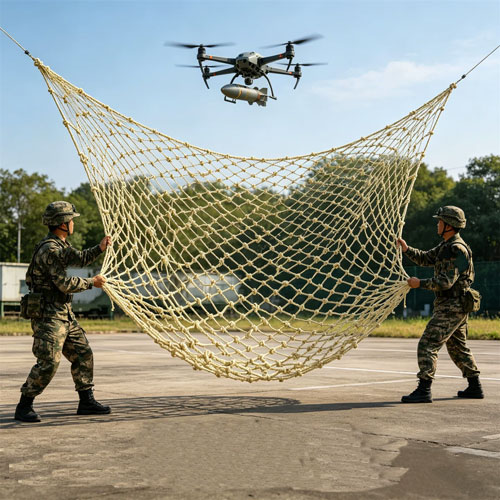
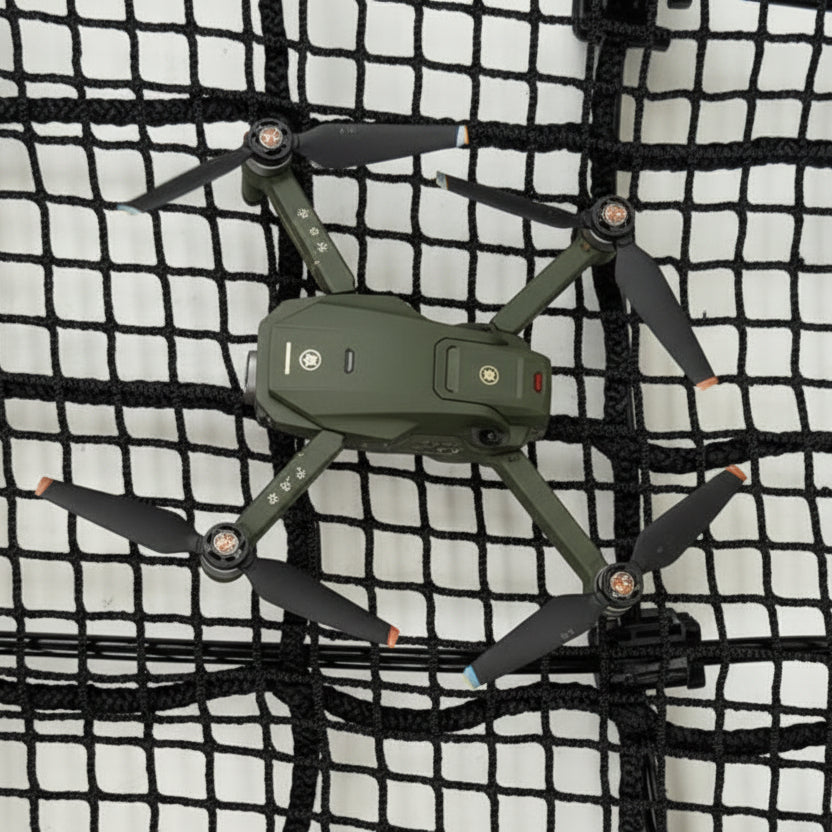
The rapid proliferation of unmanned aerial vehicles (UAVs) across European airspace has created an urgent demand for robust counter-drone solutions. Among the most effective physical mitigation technologies is the anti-drone net Europe market has increasingly adopted as a primary line of defense against unauthorized drone intrusions. Unlike electronic jamming or detection-only systems, physical netting provides a proven capture-and-neutralize capability that works against all drone types, including autonomous and GPS-guided platforms.
This comprehensive guide examines the full landscape of anti-drone net solutions tailored for the European market. We explore the regulatory framework governing CE certifications and EASA approvals, analyze deployment across critical sectors from airport security to Schengen border protection, and provide actionable guidance for procurement under EU defense fund policies. Whether you are securing a prison facility, protecting critical infrastructure, or strengthening border security, understanding the European-specific requirements for anti-drone netting is essential for compliant and effective deployment.
Throughout this article, we address the key questions that procurement officers, security directors, and facility managers across Europe face when evaluating physical drone interception systems. From GDPR compliance considerations to technical specifications required by European standards, this resource covers every aspect of deploying an anti-drone net Europe solution.
European Regulatory Framework for Anti-Drone Nets
CE Certification Requirements for Anti-Drone Nets in Europe
Any CE certified anti-drone net Europe solution must meet a specific set of conformity requirements before it can be legally marketed and deployed within the European Economic Area. CE marking indicates that the product complies with essential health, safety, and environmental requirements defined by applicable European directives and regulations.
For anti-drone netting systems, the relevant CE certification frameworks typically include:
- Machinery Directive (2006/42/EC) — applies to net deployment and retraction mechanisms that incorporate moving parts, winches, or automated tensioning systems
- EMC Directive (2014/30/EU) — relevant if the anti-drone net system includes electronic sensors, detection integration, or automated activation components
- Low Voltage Directive (2014/35/EU) — covers any electrical control systems powering net deployment infrastructure
- Personal Protective Equipment Regulation (EU) 2016/425 — applicable when netting is used in personnel protection contexts
- Construction Products Regulation (EU) No 305/2011 — relevant for permanent net structures installed on buildings or fixed infrastructure
Manufacturers must conduct a conformity assessment, compile technical documentation, and affix the CE mark to demonstrate compliance. For an anti-drone net deployment in Europe, the CE certification process typically requires third-party testing by a notified body to verify mechanical strength, weather resistance, and installation safety. Procurement officers should always request the Declaration of Conformity (DoC) and supporting technical files from any supplier before purchasing.
EASA Compliance for Anti-Drone Netting at European Airports
The European Union Aviation Safety Agency (EASA) sets stringent requirements for any C-UAS technology deployed at airport facilities. EASA approved anti-drone netting for European airports must demonstrate that it does not interfere with aircraft operations, navigation systems, or airport safety protocols.
EASA does not directly certify physical netting products, but it issues regulatory guidance that national aviation authorities enforce. Key compliance areas include:
- Airport safety zone integration — anti-drone netting must be installed outside critical safety areas while still providing effective coverage against drone incursions
- Bird strike mitigation — netting materials must be highly visible to avian wildlife to prevent entanglement risks near flight paths
- Radio frequency transparency — the netting must not create RF shadows or interference with airport radar, communication, or navigation equipment
- Emergency access — deployment systems must include rapid retraction mechanisms for emergency vehicles and aircraft movement
- Structural integrity — installations must withstand European wind load standards (EN 1991-1-4) and extreme weather conditions
For an anti-drone net at European airport perimeter protection, compliance typically involves coordination between the airport operator, national civil aviation authority, and the netting manufacturer. European suppliers offer EASA approved anti-drone netting for European airports that is specifically designed to meet EASA's operational safety requirements while providing reliable drone interception coverage.
GDPR Compliance in Anti-Drone Net Surveillance Systems
A critical question many European operators ask is: are anti-drone nets GDPR compliant for surveillance in Europe? The answer depends on how the net system integrates with detection and monitoring technologies. While the physical capture net itself does not process personal data, most modern anti-drone net deployments incorporate cameras, radar, or RF sensors for targeting and activation.
A GDPR compliant anti-drone net surveillance system must address the following requirements:
- Data minimization — surveillance components should capture only the data necessary for drone detection, avoiding unnecessary recording of individuals or private property
- Purpose limitation — the system must have a clearly defined lawful basis for processing, typically legitimate interest or public security under Article 6(1)(f) of the GDPR
- Data retention — recorded footage should be stored only as long as necessary for security investigations, with automatic deletion policies in place
- Transparency — signage must inform individuals that detection and recording systems are in operation within the protected perimeter
- Data Protection Impact Assessment (DPIA) — organizations deploying integrated anti-drone net systems should conduct a DPIA before installation, particularly when the system covers public areas
When selecting a CE certified anti-drone net solution with integrated surveillance, ensure the vendor provides documentation on data processing activities and offers configuration options that support GDPR compliance. A properly configured GDPR compliant anti-drone net surveillance system will include data anonymization features and configurable retention policies. European operators should also consult with their national data protection authority for sector-specific guidance, as requirements may vary between member states.
Anti-Drone Net Europe: Applications Across the European Market
Critical Infrastructure Protection with Drone Netting
European critical infrastructure — including power plants, data centers, government buildings, and telecommunications hubs — faces escalating drone threats ranging from industrial espionage to potential terrorist attacks. Deploying an anti-drone net for European critical infrastructure protection has become a standard recommendation under the EU Directive on the Resilience of Critical Entities (CER Directive, 2022/2557).
Physical anti-drone netting offers unique advantages for critical infrastructure sites:
- Complete physical barrier — unlike electronic countermeasures that can be circumvented by autonomous or pre-programmed drones, netting provides a last-resort physical capture that works against any UAV type
- Zero electronic emissions — passive net systems do not emit RF energy, making them suitable for electromagnetic-sensitive environments such as data centers and communications hubs
- 24/7 always-on protection — mechanical net systems require no signal detection to be effective; static perimeter nets provide continuous physical defense
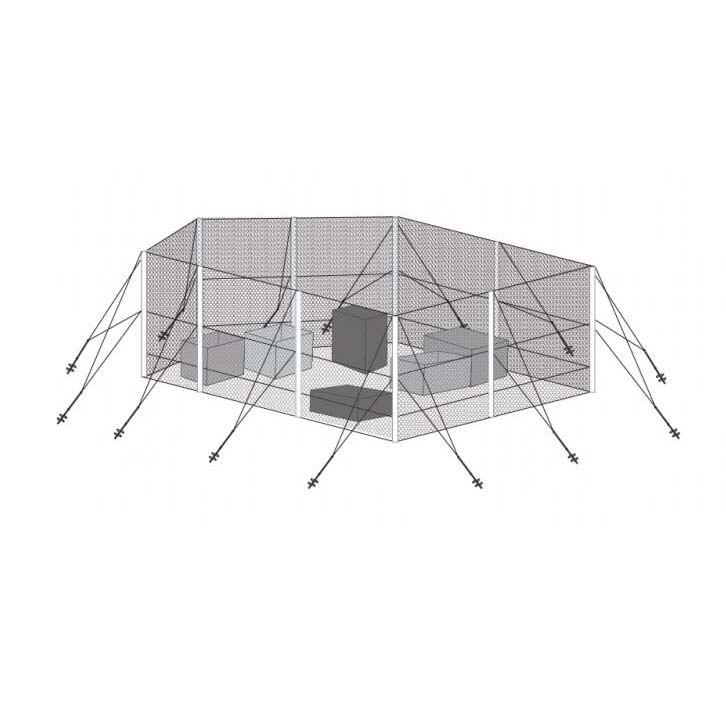
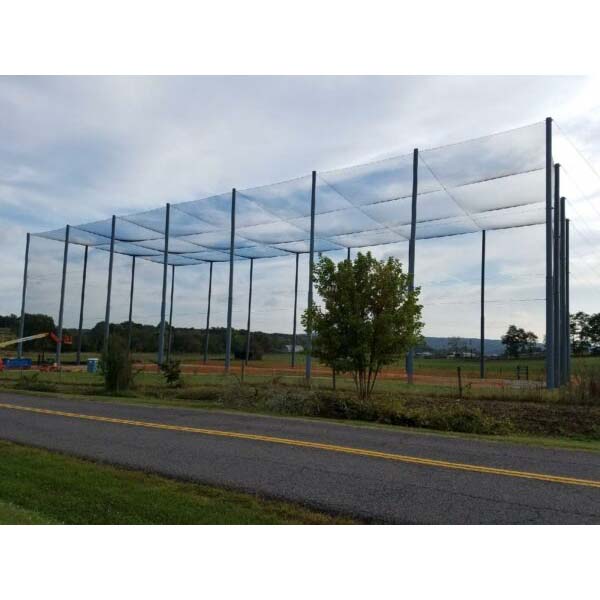
- Scalable coverage — netting can be deployed as perimeter barriers, overhead canopy systems, or targeted point-protection for specific assets such as transformer yards or fuel storage areas
European critical infrastructure operators should conduct a drone threat risk assessment following the EN 62305-2 framework for risk management. Based on the assessment, an anti-drone net Europe solution can be designed as either a permanent overhead structure for continuous coverage or a rapid-deployment system for temporary protection during heightened threat periods.
Schengen Area Border Security Deployment
The Schengen Area's open internal borders create unique security challenges, as drone incursions at external border points can rapidly affect multiple member states. Deploying an anti-drone net for Schengen area border security is increasingly part of integrated border management strategies supported by the European Border and Coast Guard Agency (Frontex).
Border security applications for anti-drone netting include:
- Border crossing point protection — netting canopies over inspection areas prevent drones from dropping contraband or conducting surveillance on border control operations
- Detention facility perimeter security — netting prevents unauthorized drone flights near migrant holding centers and temporary accommodation facilities
- Patrol corridor coverage — mobile net deployment systems can be rapidly positioned along known smuggling routes to intercept contraband-carrying drones
- Critical border infrastructure — bridges, tunnels, and rail terminals at Schengen external borders benefit from permanent anti-drone net installations
Frontex has published technical guidelines for C-UAS systems at external border crossing points, emphasizing the need for multi-layered approaches that combine detection, tracking, and physical interception. Deploying an anti-drone net for Schengen area border security requires systems that integrate with existing surveillance infrastructure while maintaining compatibility with Schengen Border Code requirements. Similarly, an anti-drone net for European critical infrastructure protection at border facilities must follow the same integration standards.
Anti-Drone Nets for European Prisons and Correctional Facilities
Prison authorities across Europe face a growing epidemic of drone-delivered contraband — including mobile phones, drugs, and weapons — being flown into correctional facilities. An anti-drone net for European prisons and correctional facilities has become the preferred physical countermeasure, as jamming-based solutions may interfere with prison communication systems and are subject to national spectrum regulations.
Key requirements for prison anti-drone net installations include:
- Full aerial coverage — netting must cover all outdoor areas including exercise yards, sports fields, and delivery zones where drones might drop contraband
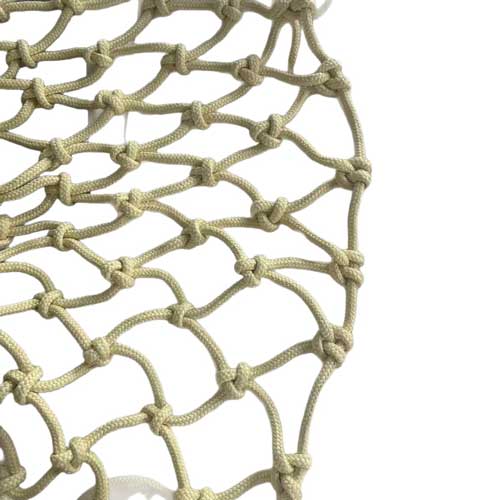
- Vandalism resistance — materials must withstand tampering attempts by inmates and offer high cut/shear resistance (aramid fiber or stainless steel mesh recommended)
- Low maintenance — prison budgets require durable systems with minimal ongoing upkeep; HDPE and stainless steel options offer 10-15 year service lives
- Integration with prison security systems — netting should connect to existing CCTV and alarm infrastructure for coordinated threat response
- Weather resilience — installations must perform reliably across European climate zones, from Nordic winter conditions to Mediterranean summer heat
Several European countries including France, the United Kingdom, and the Netherlands have already mandated anti-drone netting for high-security correctional facilities. Privacy and human rights considerations require that netting installations do not restrict natural light or create oppressive conditions for inmates. Modern prison netting solutions use high-transparency mesh designs that maintain visibility while preventing drone incursions.
EU Defense Fund and Anti-Drone Procurement Policy
The European Defence Fund (EDF) plays an increasingly significant role in shaping how European Union member states procure counter-drone technologies. Understanding the EU defense fund anti-drone procurement policy is essential for both suppliers and buyers operating in the European C-UAS market.
Under the current EDF programming framework, counter-drone technologies — including physical interception systems like anti-drone netting — are classified under the "Protection of Critical Infrastructure and Civil Security" priority area. The 2023-2027 EDF work programme allocates substantial funding for collaborative C-UAS research and development projects involving at least three entities from three different member states.
Key aspects of the EU defense fund anti-drone procurement policy include:
- Collaborative procurement incentives — the EDF provides co-financing for joint procurement of C-UAS systems by multiple member states, reducing individual country costs while promoting interoperability
- European preference — funded procurement favors solutions manufactured within the EU or associated countries, with preference given to systems using European-sourced materials and technologies
- Interoperability standards — procured anti-drone systems must be compatible with NATO standards (STANAG) and European defense agency technical specifications
- Dual-use technology support — the EDF explicitly funds dual-use C-UAS technologies that serve both military and civilian security applications, including physical netting systems
- Innovation acceleration — grants are available for developing next-generation anti-drone net technologies, including smart detection-integrated nets and automated deployment systems
Recent EDF-funded projects have specifically targeted advancements in physical C-UAS technologies. For example, the European anti-drone net R&D consortium (a collaboration between German, French, and Spanish defense technology firms) received EDF co-funding to develop automated net deployment systems for critical infrastructure protection.
For suppliers looking to participate in EU defense fund anti-drone procurement, the first step is registering with the European Defence Agency's (EDA) collaborative procurement portal. Products must meet the EDA's technology readiness level (TRL) requirements and demonstrate compliance with applicable European certification standards. The procurement process typically involves competitive tendering through the Official Journal of the European Union (OJEU), with evaluation criteria weighting both technical capability and value for money.
Security directors and procurement officers should note that the EU defense fund anti-drone procurement policy also includes provisions for training, maintenance, and lifecycle support. When submitting funding applications for anti-drone net installations, include comprehensive lifecycle cost projections and maintenance plans to increase the likelihood of approval.
Technical Specifications for the European Market
Anti-drone net systems designed for the European market must meet specific technical standards that differentiate them from general-purpose netting products. The following table summarizes the key technical specifications to evaluate when selecting an anti-drone net Europe solution:
| Specification | European Standard | Recommended Value | Notes |
|---|---|---|---|
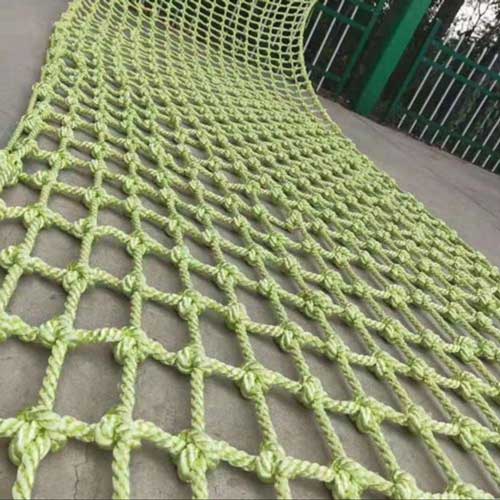
| Mesh Size | EN 13463-1 | 20-50 mm | Small enough to entangle common consumer and prosumer drone propeller spans (250 mm+ diagonal) |
| Breaking Strength | EN ISO 13934-1 | ≥ 2,000 N (aramid) / ≥ 3,000 N (steel) | Must withstand drone impact force plus payload weight without tearing |
| UV Resistance | EN ISO 4892-2 | ≥ 5 years (HDPE) / ≥ 15 years (steel) | European climate conditions require UV-stabilized materials for outdoor longevity |
| Fire Resistance | EN 13501-1 | Class B-s1, d0 or better | Critical for airport and industrial installations where fire safety regulations apply |
| Wind Load Capacity | EN 1991-1-4 | Up to 150 km/h (depending on installation zone) | Static net structures must be engineered for local wind zone conditions |
| Material Options | Various | Aramid fiber, stainless steel (AISI 304/316), HDPE | Material choice depends on environment: aramid for mobility, steel for permanent, HDPE for cost-effectiveness |
| Corrosion Resistance | EN ISO 9227 | ≥ 720 h salt spray (steel components) | Essential for coastal installations and Nordic winter road salt environments |
| Temperature Range | EN 60068-2-1/2 | -40°C to +80°C | Must cover full European climate spectrum from Finnish winters to Spanish summers |
| Deployment Speed | Internal (no standard) | ≤ 3 seconds (automated) / ≤ 30 minutes (manual) | Automated systems require fast deployment for reactive interception scenarios |
| Service Life | EN 13241-1 | 5-10 years (HDPE) / 10-20 years (stainless steel) | Longer service life reduces total cost of ownership for permanent installations |
When specifying technical requirements for an anti-drone net for European critical infrastructure protection, it is essential to match the netting material to the specific threat environment. For example, permanent installations at Schengen border crossing points benefit from stainless steel mesh for its durability and low maintenance requirements, while temporary deployments for special events or VIP protection may prefer lightweight aramid fiber nets for rapid setup and teardown.
European procurement officers should also verify that installation hardware — including poles, anchors, tensioning cables, and foundation systems — complies with relevant Eurocodes (EN 1990-1999 series). Substandard mounting infrastructure has been identified as a common failure point in early anti-drone net deployments across Europe.
Selecting a CE-Certified Anti-Drone Net Supplier in Europe
Choosing the right supplier for a CE certified anti-drone net Europe installation requires careful evaluation of technical capability, regulatory compliance, and after-sales support. The European C-UAS market includes both established defense contractors and specialized netting manufacturers, each offering different advantages depending on the application.
When evaluating potential suppliers, European procurement officers should consider the following criteria:
- CE certification documentation — verify that the supplier provides complete Declaration of Conformity documentation, technical construction files, and notified body test reports for all system components
- European manufacturing presence — suppliers with manufacturing facilities within the EU offer shorter supply chains, faster delivery times, and simpler customs compliance
- Reference installations — request case studies and site visit opportunities for existing European installations in similar application environments (airport, prison, border, or critical infrastructure)
- Local service network — ensure the supplier has certified installation partners or direct service teams in your region for ongoing maintenance and emergency repairs
- Customization capability — European sites often require bespoke solutions to accommodate existing infrastructure, architectural constraints, or specific threat profiles
- Insurance and liability coverage — verify that the supplier carries appropriate product liability insurance that covers European jurisdictions and regulatory requirements
- Compliance with EU public procurement directives — for publicly funded installations, the supplier must meet the transparency and equal treatment requirements of Directive 2014/24/EU
An important consideration for any European anti-drone net project is the total cost of ownership, not just the initial purchase price. European labor costs for installation and maintenance are significant factors. A higher-quality stainless steel system with a 20-year service life may offer better value than a lower-cost HDPE system requiring replacement within 5-7 years, particularly when factoring in installation labor, operational downtime, and disposal costs.
European buyers should also verify that their chosen supplier understands the specific regulatory landscape of their country. While CE certification provides a baseline, individual member states may impose additional requirements for anti-drone technology deployment. For example, France requires pre-approval from the Agence Nationale de la Sécurité des Systèmes d'Information (ANSSI) for certain C-UAS systems, while Germany's Luftverkehrsgesetz (LuftVG) imposes restrictions on physical barriers near aviation facilities.
Finally, consider the supplier's research and development trajectory. The EU defense fund anti-drone procurement policy increasingly favors innovative, next-generation solutions. Suppliers actively participating in EDF-funded R&D projects or European defense innovation programs are likely to offer products that remain compliant and effective as regulatory frameworks evolve.
Conclusion
The European market for anti-drone net solutions continues to expand as regulatory frameworks mature, threat vectors diversify, and funding mechanisms like the European Defence Fund accelerate adoption. Deploying an effective European anti-drone net strategy requires a thorough understanding of CE certification requirements, EASA compliance standards, GDPR obligations, and sector-specific deployment considerations.
Whether your priority is protecting critical infrastructure, securing Schengen area borders, safeguarding airport operations, or preventing contraband deliveries at correctional facilities, physical anti-drone netting offers a proven, reliable, and regulation-compatible solution. Unlike electronic countermeasures that may conflict with European spectrum regulations or raise privacy concerns under GDPR, well-designed netting systems provide passive, always-on protection with minimal regulatory friction when properly implemented.
Key takeaways for European procurement decision-makers:
- Verify CE certification — ensure any CE certified anti-drone net Europe product comes with complete conformity documentation covering all applicable directives
- Engage with national authorities early — coordinate with aviation authorities, data protection agencies, and security regulators during the planning phase to avoid compliance delays
- Leverage EU funding opportunities — the European Defence Fund and national security grant programs can significantly offset procurement costs for qualifying installations
- Choose material for the environment — match netting material (aramid, stainless steel, or HDPE) to the specific operational environment, threat level, and service life requirements
- Plan for integration — successful anti-drone net deployments integrate with existing security infrastructure, detection systems, and incident response protocols
As drone technology continues to evolve and the European regulatory landscape develops, physical netting remains a cornerstone technology for national security and public safety. By selecting certified products, working with experienced suppliers, and following the compliance frameworks outlined in this guide, European organizations can deploy anti-drone net solutions that provide effective, long-term protection against the growing threat of unauthorized UAV operations.
For more detailed guidance on specific applications — including anti-drone net for European prisons and correctional facilities, airport perimeter protection, or critical infrastructure security — consult with certified European suppliers who can provide site-specific assessments and turnkey installation services tailored to your operational requirements.