Introduction
When securing your facility against unauthorized drone incursions, one of the first questions that arises is: what is the anti drone net installation cost estimate for a system that provides reliable protection? Understanding the full financial picture — from materials and hardware to labor and ongoing maintenance — is essential for budgeting and planning an effective counter-drone strategy.
This comprehensive cost and pricing guide breaks down every component that contributes to your total investment. We cover typical anti drone net cost per square foot, the differences between material types like aramid and steel, pole and mounting expenses, and how installation costs vary across facility types such as prisons, airports, and industrial sites. Whether you are evaluating a small perimeter upgrade or a large-scale protection system, this guide will help you arrive at an accurate budget and make an informed purchasing decision.
Read on to explore the average anti drone net cost, the key factors that influence pricing, and practical steps to obtain a precise estimate tailored to your specific facility requirements.
Anti Drone Net Installation Cost Estimate: What to Expect
Before diving into the detailed numbers, it helps to understand the general pricing landscape for anti-drone net systems. An anti drone net installation cost estimate typically ranges from $5 to $25 per square foot depending on material choice, site complexity, and structural requirements. The total project cost for a complete system — including netting, support poles, mounting hardware, engineering, and installation labor — usually falls between $15,000 and $250,000 for most commercial and industrial facilities.
The wide range reflects the custom nature of each installation. A small industrial storage yard requiring basic perimeter coverage will sit at the lower end, while a large airport perimeter with specialized mounting structures and engineering assessments will be at the higher end. Understanding these ranges gives you a realistic starting point when evaluating your own anti drone net system cost.
It is also important to note that these figures represent a capital investment with long-term value. Unlike active electronic counter-drone systems that require frequent upgrades and have ongoing licensing fees, physical anti-drone netting is a passive, durable solution with minimal recurring costs after installation. The table below summarizes typical cost ranges by system size:
| System Scale | Coverage Area | Typical Cost Range | Best For |
|---|---|---|---|
| Small | 500 – 2,000 sq ft | $15,000 – $40,000 | Small industrial sites, equipment yards |
| Medium | 2,000 – 10,000 sq ft | $40,000 – $120,000 | Utility substations, warehouses, prisons |
| Large | 10,000 – 50,000+ sq ft | $120,000 – $250,000+ | Airports, military bases, large perimeters |
Factors Affecting Anti-Drone Net Installation Cost
The total anti drone net installation cost is influenced by several interconnected factors. Understanding each one helps you identify where costs can be optimized and what trade-offs exist between upfront investment and long-term durability. Below we examine the three most significant cost drivers in detail.
Coverage Area and Perimeter Size
Coverage Area and Perimeter Size
The single largest factor in your anti drone net installation cost estimate is the total coverage area that needs protection. Costs scale nearly linearly with square footage, though there are economies of scale for larger installations. A facility requiring 1,000 square feet of netting will pay a higher per-square-foot rate than one needing 10,000 square feet because mobilization, engineering, and setup costs are spread across more material.
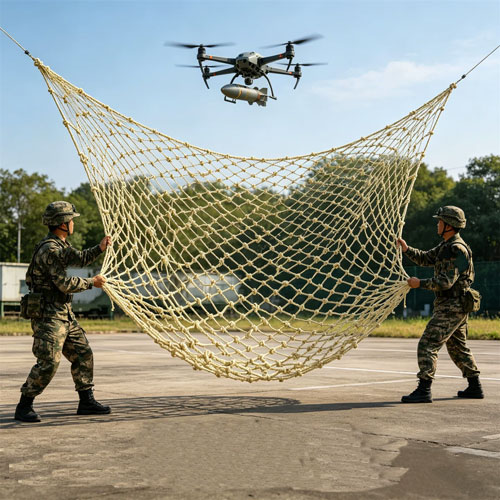
When calculating your area requirements, consider both horizontal coverage (overhead netting for open yards) and vertical coverage (perimeter walls and fences). A typical overhead installation might cost $8–$18 per square foot, while vertical perimeter netting is often less expensive at $5–$12 per square foot since it requires less structural support. For facilities with irregular geometries or obstacles, additional custom fabrication will increase the overall anti drone net cost per square foot.
Material Type: Aramid vs Steel Cost Comparison
Material Type: Aramid vs Steel Cost Comparison
The choice between aramid fiber and stainless steel netting is one of the most important decisions affecting your anti drone net system cost. Each material has distinct properties that influence both upfront pricing and long-term value.
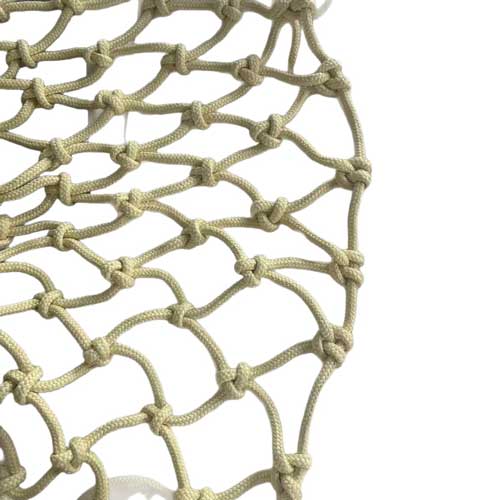
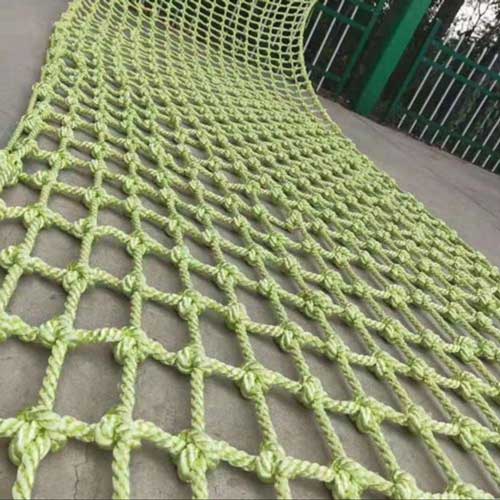
Aramid fiber nets (such as Kevlar or Twaron) typically cost $12–$22 per square foot installed. They offer excellent strength-to-weight ratio, are easier to handle during installation, and do not rust or corrode. However, aramid can degrade under prolonged UV exposure unless properly coated, which may require more frequent inspection in sunny climates.
Stainless steel rope nets generally cost $8–$16 per square foot installed. They provide superior durability, are highly resistant to weather and UV damage, and can last 10–15 years with minimal maintenance. The trade-off is that steel nets are heavier and require stronger support structures, which can add to mounting hardware and pole costs.
For most permanent installations, stainless steel offers the best long-term value despite a slightly higher upfront structure cost. Aramid nets are better suited for temporary installations or sites where weight limitations on existing structures are a concern.
Site Type: Prisons vs Airports vs Industrial
Site Type: Prisons vs Airports vs Industrial
The type of facility you are protecting significantly impacts the anti drone net installation cost. Different site types have unique requirements, regulatory considerations, and structural challenges that drive pricing variations.
Prisons and correctional facilities typically require robust, tamper-resistant installations with additional security features. The average anti drone net system cost for prisons tends to be 15–25% higher than industrial sites due to the need for reinforced mounting, anti-cut netting materials, and restricted-access installation conditions. Costs for prison installations generally range from $12–$22 per square foot.
Airports face some of the highest costs due to strict aviation regulations, extensive perimeter lengths, and the need for engineering certifications. Airport netting systems must withstand high winds, comply with FAA or EASA requirements, and often require specialized installation teams. The anti drone net installation cost for airports is typically $15–$25 per square foot, with total projects frequently exceeding $200,000 for full perimeter coverage.
Industrial facilities, utility substations, and warehouses tend to have the most straightforward installations with costs ranging from $8–$16 per square foot. These sites usually have fewer regulatory hurdles, simpler perimeter layouts, and easier equipment access, keeping both material and labor costs moderate.
Anti-Drone Net Cost Per Square Foot Breakdown
One of the most practical ways to budget for your project is to understand the anti drone net cost per square foot across different material and configuration options. This metric allows you to quickly estimate total costs based on your facility's dimensions. Below is a detailed breakdown of price ranges by material and application type:
| Configuration | Material | Cost Per Square Foot | Typical Lifespan |
|---|---|---|---|
| Vertical perimeter | Stainless steel mesh | $5 – $10 | 10–15 years |
| Vertical perimeter | Aramid fiber | $10 – $16 | 5–8 years |
| Overhead canopy | Stainless steel rope | $10 – $18 | 10–15 years |
| Overhead canopy | Aramid fiber | $14 – $22 | 5–8 years |
| Custom/irregular shapes | Any material | $15 – $25 | Varies |
Several factors influence the final average anti drone net cost per square foot beyond just the base material. Custom cutting and fabrication add 10–20% to material costs. Netting with smaller mesh sizes (tighter weave for smaller drones) costs more per square foot than standard mesh. Additionally, netting color and coating options — such as camouflage, UV-resistant, or anti-corrosion treatments — can add $1–$3 per square foot.
It is worth noting that the anti drone net cost per square foot typically decreases for larger orders. Many suppliers offer tiered pricing where orders above 5,000 square feet receive a 10–15% discount. If you are planning a large installation, requesting bulk pricing can significantly reduce your per-unit costs.
Poles, Mounting Hardware and Support Structure Costs
Poles, Mounting Hardware and Support Structure Costs
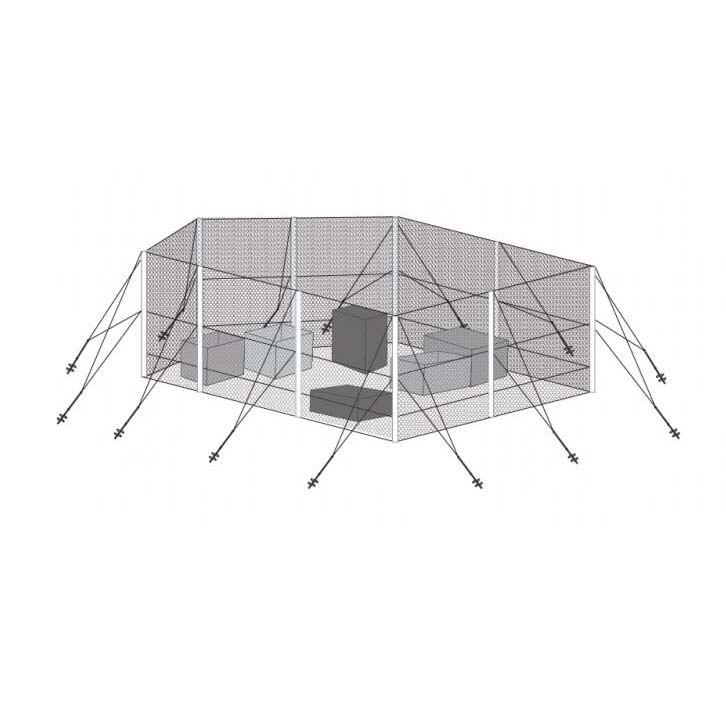
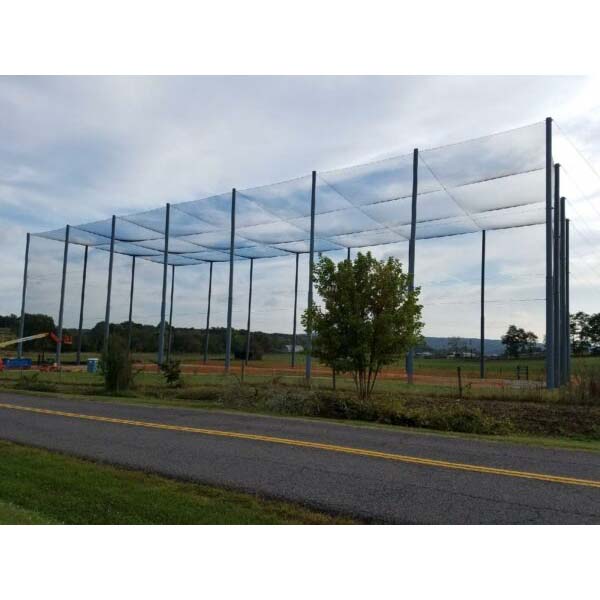
Beyond the netting material itself, the support structure is a major component of your anti drone net system cost. Poles, mounting hardware, foundations, and tensioning systems are required to keep the net properly deployed and effective. Here is what you can expect for these structural components:
- Galvanized steel poles (standard): $150 – $400 per pole, depending on height (12–30 ft). A typical perimeter installation requires one pole every 20–30 feet.
- Concrete foundations for poles: $200 – $600 per pole, including excavation, concrete, and curing time.
- Tension cables and turnbuckles: $5 – $15 per linear foot of netting edge, including stainless steel hardware.
- Corner support structures for overhead installations: $500 – $2,000 per corner, depending on span width.
- Mounting brackets and anchors: $50 – $150 per connection point, with pricing dependent on wall material (concrete vs steel vs masonry).
- Ground-level anchoring systems for tensioning: $300 – $800 per anchor point.
For a typical medium-sized perimeter installation, the average cost of poles and mounting hardware ranges from $5,000 to $25,000, representing approximately 20–30% of the total project cost. The exact amount depends on pole spacing, soil conditions affecting foundation costs, and whether the net is a simple vertical barrier or a complex overhead canopy requiring additional structural engineering.
If existing structures (walls, building roofs, existing poles) can be utilized for mounting, these costs can be significantly reduced. A site survey by an experienced installer is essential to determine the most cost-effective support configuration for your specific layout.
Average Anti-Drone Net System Cost by Application
To give you a clearer picture of what your project might cost, here are typical average anti drone net cost ranges for common facility types and application scenarios. These estimates include materials, support structures, hardware, and professional installation unless otherwise noted.
Small Industrial Facility (500–2,000 sq ft)
A small equipment yard, pumping station, or communications tower protection zone. These installations are straightforward with simple perimeter layouts. Estimated anti drone net system cost: $15,000 – $40,000. Installation typically takes 2–4 days.
Utility Substation (2,000–5,000 sq ft)
Medium-sized electrical substations require overhead canopy protection to prevent drone interference and espionage. Estimated cost: $35,000 – $80,000. These installations often require coordination with utility operations and may involve restricted-access procedures.
Correctional Facility / Prison (5,000–15,000 sq ft)
Prisons require robust perimeter and overhead protection with anti-tamper features. The anti drone net installation cost for prisons is higher due to security requirements. Estimated cost: $75,000 – $200,000. Installation typically spans 1–3 weeks.
Airport Perimeter (10,000–50,000+ sq ft)
Airports represent the largest and most complex installations, often requiring phased implementation across multiple zones. Estimated cost: $120,000 – $250,000+. Full airport perimeter installation can take 3–8 weeks depending on runway access restrictions.
Military or Government Facility (custom sizing)
These projects involve the highest specifications and strictest security protocols. Costs are typically quoted per project and can exceed $500,000 for large-scale installations with integrated sensor systems and ballistic-rated netting.
Installation Labor and Engineering Costs
Labor and engineering are significant components of the anti drone net installation cost estimate, typically accounting for 25–40% of the total project budget. The complexity of the installation, local labor rates, and the need for specialized equipment all influence this portion of the cost.
Site survey and engineering assessment: $1,000 – $5,000. A professional site survey evaluates your facility layout, soil conditions for pole foundations, wind load calculations, and existing structures that can be used for mounting. Many installers include this as part of their quotation or apply it toward the total project cost.
Installation labor rates: Most anti-drone net installation teams charge $65–$150 per hour per crew member, with a typical crew consisting of 3–5 workers. The total labor cost for a medium installation (3,000–5,000 sq ft) ranges from $8,000 to $20,000.
Specialized equipment: If your installation requires cranes, aerial lifts, or scaffolding, equipment rental adds $500–$3,000 to the project cost. Overhead canopy installations over active facilities may require night or weekend work at premium labor rates.
Engineering and permitting: Some jurisdictions require structural engineering stamps for elevated netting structures. Engineering fees range from $1,500 to $6,000 depending on complexity. Airport installations may also require additional FAA-compliant engineering studies.
Travel and mobilization: For installations more than 100 miles from the installer’s base, travel and accommodation costs can add $2,000–$5,000 to the total. Choosing a local installer with experience in anti-drone net systems can help reduce these expenses.
Ongoing Maintenance and Operational Costs
Understanding the complete cost picture requires looking beyond the initial installation. One of the most common questions facility managers ask is: are there ongoing maintenance costs after anti-drone net installation? The answer is yes, though these costs are relatively modest compared to active electronic counter-drone systems.
Routine inspection: Visual inspections every 3–6 months cost approximately $300–$800 per visit, or can be performed by facility staff with proper training. These inspections check for tears, loose tensioning, corrosion, and vegetation interference.
Annual professional maintenance: A comprehensive annual service that includes tension adjustment, hardware tightening, minor repairs, and corrosion treatment typically costs $1,000–$3,000 per year for medium-sized installations.
Repair and replacement: Over time, netting may need spot repairs due to weather damage, bird strikes, or accidental impact. Small patch repairs cost $200–$600 per location. Full net replacement for a section runs $5–$15 per square foot installed, depending on material.
Long-term replacement cycle: Stainless steel nets typically need full replacement every 10–15 years, while aramid nets may need replacement every 5–8 years. Budgeting approximately 5–8% of the initial installation cost per year for maintenance and eventual replacement ensures your system remains effective throughout its service life.
Despite these ongoing costs, physical anti-drone netting remains one of the most cost-effective long-term counter-drone solutions available. Unlike electronic systems that require firmware updates, licensing fees, and component upgrades every 3–5 years, netting systems have predictable, low-maintenance costs over their lifespan.
How to Get an Accurate Anti-Drone Net Cost Estimate
Getting a reliable anti drone net installation cost estimate for your specific facility requires more than just multiplying square footage by a per-unit price. Each installation is unique, and accurate budgeting depends on several site-specific variables. Here is a step-by-step approach to obtaining the most precise estimate possible.
Step 1: Define your protection requirements. Start by mapping the areas that need protection — overhead zones, vertical perimeters, or both. Measure the total square footage and note any irregular shapes, obstacles, or height variations. Document whether you need permanent or temporary protection, as this affects material recommendations and costs.
Step 2: Determine your threat level and regulatory requirements. Different facility types face different drone threats. A prison needs anti-cut, anti-tamper netting with alarm integration. An airport needs wind-rated systems with aviation authority approvals. Industrial sites may have simpler requirements. Understanding your risk profile helps installers recommend the right material grade and configuration.
Step 3: Request multiple detailed quotations. Contact at least 2–3 experienced anti-drone net installation companies. Provide them with your site measurements, photos, and protection requirements. A professional quotation should itemize material costs (netting type and quantity), support structure costs (poles, foundations, hardware), installation labor, engineering fees, and any travel expenses.
Step 4: Ask about site survey inclusion. Many reputable installers include a physical site survey in their quotation process. This is critical for identifying hidden cost factors such as underground utilities affecting pole placement, wind load requirements, soil conditions, and existing structures that can be leveraged for mounting.
Step 5: Compare total cost of ownership, not just upfront price. Evaluate maintenance requirements, expected lifespan, and warranty coverage when comparing quotes. A slightly more expensive stainless steel system with a 15-year lifespan may cost less over time than a cheaper aramid system needing replacement in 5–7 years.
If you are ready to begin the process, contact our team for a customized anti drone net installation cost estimate tailored to your facility. We provide free initial consultations and can connect you with certified installers in your region.
Conclusion
Investing in an anti-drone net system is a significant decision that requires careful budget planning. This guide has covered the key components that determine your overall investment — from material selection (aramid vs stainless steel), to per-square-foot pricing, to poles and mounting hardware, to labor and ongoing maintenance.
To summarize the key takeaways:
- The anti drone net cost per square foot ranges from $5 to $25 depending on material and configuration
- The average anti drone net cost for a complete system ranges from $15,000 to $250,000+
- Installation costs vary significantly by site type — prisons and airports command higher prices than industrial facilities
- Support structures (poles, foundations, hardware) represent 20–30% of total system cost
- Ongoing maintenance costs are modest at 5–8% of initial investment per year
- Requesting multiple detailed quotes with site surveys is the best way to get an accurate estimate for your facility
Physical anti-drone netting remains one of the most reliable and cost-effective counter-drone solutions available. By understanding the cost factors outlined in this guide, you can make an informed decision that balances upfront investment with long-term protection value. Contact a certified installer today to begin the assessment process for your facility.