Introduction
National borders face an escalating threat from unauthorized drones used for surveillance, smuggling, and territorial violations. As unmanned aerial vehicles (UAVs) become more affordable and capable, border security agencies worldwide are seeking reliable countermeasures. Among the most effective physical barriers available today is the border security net — a high-strength physical interception system specifically engineered to capture and neutralize drones attempting to cross national boundaries.
These net systems provide a tangible, non-electronic defense layer that physically entangles drones on contact, preventing them from completing surveillance missions or delivering contraband across borders. Unlike electronic countermeasures that can be jammed or spoofed, these physical nets offer assured interception regardless of drone autonomy levels or GPS-denied environments. This article explores how anti-drone nets work for border security, their advantages over electronic systems, deployment strategies for remote terrain, regulatory considerations, and cost factors for national border protection programs.
Throughout this guide, we examine real-world applications from the Schengen Area to the Korean DMZ, demonstrating how nations are integrating physical netting into their broader counter UAS for drone defense and national security frameworks.
What Is a Border Security Anti-Drone Net?
A border security net is a specialized physical barrier system designed to intercept, entangle, and neutralize unauthorized drones attempting to cross or operate near national borders. Unlike conventional perimeter fencing, these nets are engineered with specific mesh geometries, tensile strengths, and deployment configurations optimized for capturing airborne UAVs of varying sizes — from small consumer quadcopters used for surveillance to larger hexacopters capable of carrying smuggling payloads.
How Physical Interception Works
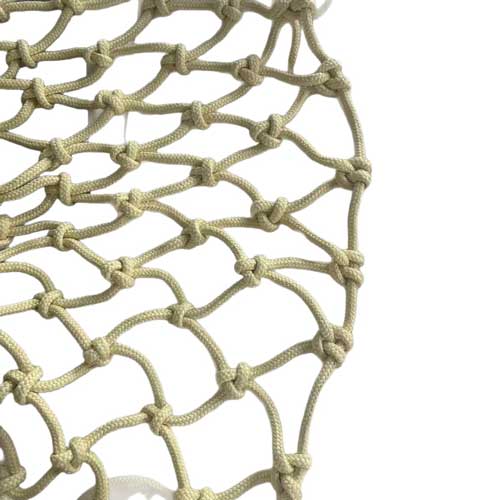
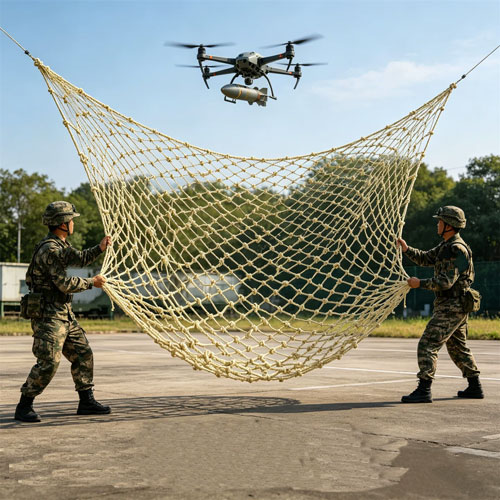
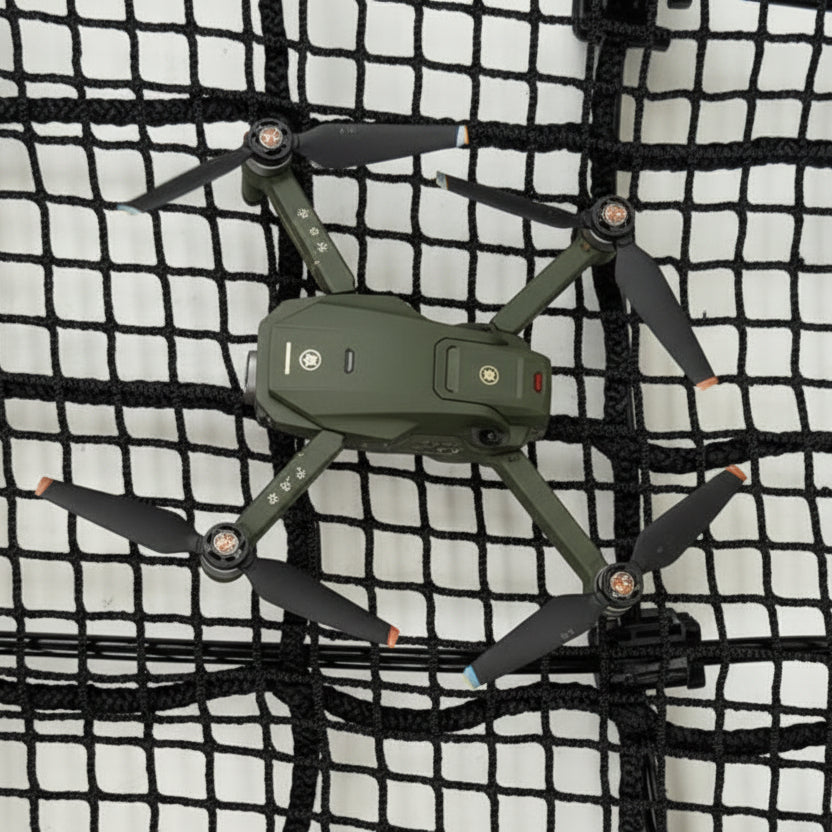
The principle behind this technology is elegantly simple yet highly effective. When a drone flies into the net, its propellers become entangled in the mesh fibers, causing immediate loss of thrust and controlled descent. The net absorbs the kinetic energy of impact, bringing the drone to a controlled stop without detonating any payload or causing fragmentation. This physical capture approach offers several distinct advantages:
- 100% interception rate — drones cannot jam, spoof, or electronically evade a physical barrier
- Preservation of evidence — the captured drone and its payload remain intact for forensic analysis
- No electronic signature — passive defense that cannot be detected or countermeasured by drone operators
- Works in GPS-denied environments — autonomous or pre-programmed drones are equally vulnerable
Key Materials and Specifications
Modern anti-drone net systems for border security utilize three primary material categories, each suited to different threat environments and deployment durations:
| Material | Tensile Strength | Best Use Case | Weather Resistance |
|---|---|---|---|
| Aramid Fiber (e.g., Kevlar) | 3,000+ MPa | High-threat border sections | Excellent UV/moisture resistance |
| Stainless Steel Wire Rope (AISI 304/316) | 1,500+ MPa | Permanent border installations | Superior corrosion resistance |
| HDPE (High-Density Polyethylene) | 400-800 MPa | Temporary or rapid-deployment zones | Good with UV stabilizers |
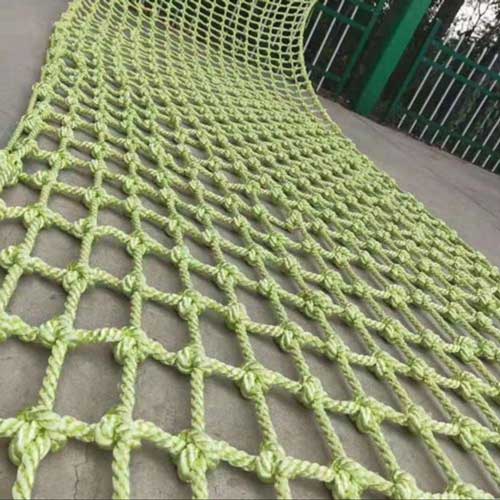
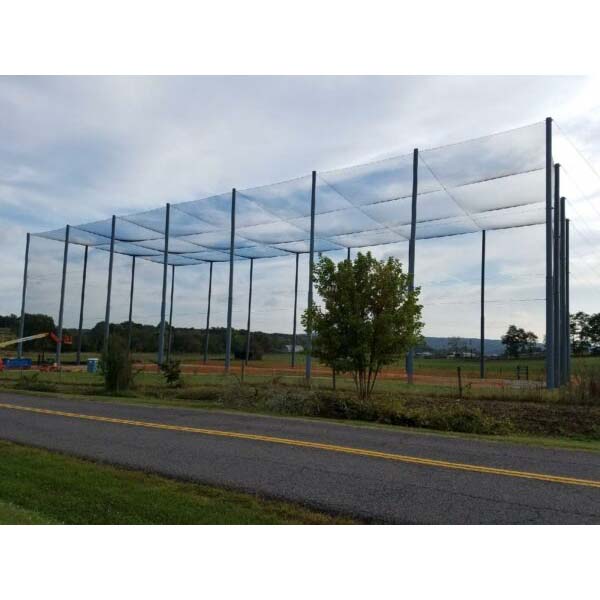
Mesh apertures typically range from 40mm × 40mm to 100mm × 100mm, designed to catch rotor arms while minimizing wind load. System heights vary from 6 meters for ground-level interception to 30+ meters for elevated deployment covering canyon routes or valley crossings commonly used by drug and human trafficking operations.
Border Security Net vs Electronic Drone Detection
When evaluating border protection strategies, security agencies commonly compare physical net systems against electronic drone detection and jamming solutions. Both approaches have merits, but they address fundamentally different vulnerabilities in the drone threat landscape.
| Factor | Border Security Net | Electronic Detection/Jamming |
|---|---|---|
| Interception method | Physical entanglement | RF jamming, GNSS spoofing, radar detection |
| Effectiveness against autonomous drones | 100% (no electronic dependency) | Limited (autonomous drones fly without RF/GNSS) |
| Evasion countermeasures | None — physical barrier cannot be spoofed | Vulnerable to frequency hopping, directional antennas, AI navigation |
| Evidence preservation | Full drone and payload recovery | Drone may crash uncontrolled, destroying evidence |
| Regulatory approval | No spectrum licensing required | Strict spectrum regulations apply |
| Operational cost (annual) | Low — passive system, minimal maintenance | High — active electronics, trained operators, spectrum fees |
| Deployment speed | Days to weeks for permanent install | Weeks to months for full sensor integration |
The most effective counter UAS for drone defense and national security strategies employ a layered approach — combining electronic detection as an early warning system with physical net barriers as the final interception layer. Electronic systems detect and track drones approaching the border, while strategically placed nets ensure physical capture at critical crossing points. This hybrid model addresses both the "detect" and "defeat" requirements of comprehensive border protection.
For national borders spanning hundreds or thousands of kilometers, deploying electronic systems across the entire frontier is cost-prohibitive. Physical net barriers are strategically concentrated at known crossing hotspots — mountain passes, river valleys, and approaches to population centers — providing cost-effective border anti-drone net protection where it matters most.
How Border Security Nets Intercept Smuggling and Trafficking Drones
Drug cartels, human trafficking networks, and contraband smugglers have rapidly adopted drones as a preferred method for moving illegal goods across borders. Drones offer smugglers low risk of interception compared to ground crossings, tunnels, or human couriers. A single commercial hexacopter can carry 5-10 kg of narcotics or contraband across a border in minutes, operating at altitudes and speeds that evade ground patrols.
Border security anti-drone net for smuggling interdiction systems are specifically designed to counter this evolving threat. These nets are deployed at known smuggling corridors — typically remote stretches of border where traditional surveillance is difficult. The interception mechanism is straightforward: as a drone carrying a payload approaches the net at typical smuggling speeds (30-60 km/h), it becomes entangled within the mesh structure. The netting material is engineered with sufficient tensile strength to arrest the momentum of the drone without tearing, cradling both the aircraft and its illicit cargo intact.
Key design features for smuggling interdiction include:
- Payload-rated netting — capable of capturing drones carrying up to 25 kg without structural failure
- Low-visibility materials — camouflage coloration and matte finishes prevent detection by drone operators
- Rapid-reset mechanisms — pulley and track systems allow quick removal of captured drones and redeployment of the net within minutes
- Integration with ground sensors — seismic, acoustic, and radar triggers alert border patrol to capture events in real time
The United States Border Patrol, Frontex (European Border and Coast Guard Agency), and GCC member states have all reported successful interdictions using physical net systems. In the US-Mexico border context, anti-drone net for US military bases and border patrol deployments have proven particularly effective along the Rio Grande Valley sector, where dense smuggling activity meets challenging terrain. These systems operate around the clock without requiring spectrum allocation or risking interference with civilian communications — a critical advantage over jamming-based countermeasures in populated border regions.
Deploying Anti-Drone Nets Along National Borders
Deploying anti-drone nets along national borders presents unique engineering and logistical challenges that differ significantly from urban or military base installations. National borders can span thousands of kilometers across diverse terrain — from deserts and mountains to forests, rivers, and coastlines. Successful border anti-drone net deployment for national border protection requires careful site assessment, structural engineering, and integration with existing border security infrastructure.
Deployment in Remote and Rugged Terrain
Remote border regions — where smuggling and illegal crossings are most concentrated — often lack road access, power, and communications infrastructure. Border drone netting system for remote and rugged terrain installations address these challenges through modular, self-supporting designs:
- Helicopter-deployable modules — pre-assembled net panels and support poles that can be airlifted to remote sites and erected by small teams within 24 hours
- Solar-powered tensioning systems — autonomous maintenance of net tension using solar-charged battery systems, eliminating the need for grid power
- Corrosion-resistant materials — stainless steel and marine-grade aluminum components for coastal and high-humidity border environments
- Self-supporting tower structures — freestanding towers that require no concrete foundations, suitable for permafrost, sand, and rocky terrain
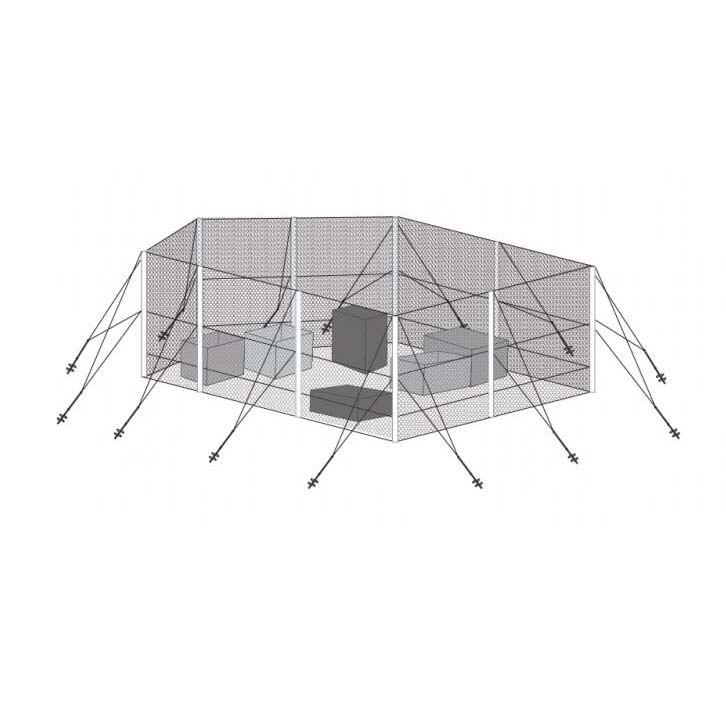
A typical remote deployment package includes 100-meter net sections with 8-meter poles, solar-powered tensioners, and integrated ground sensors. Multiple sections can be linked to cover valley crossings, mountain passes, and river corridors spanning 1-5 kilometers — the most common smuggling drone flight paths.
Integration with Existing Border Infrastructure
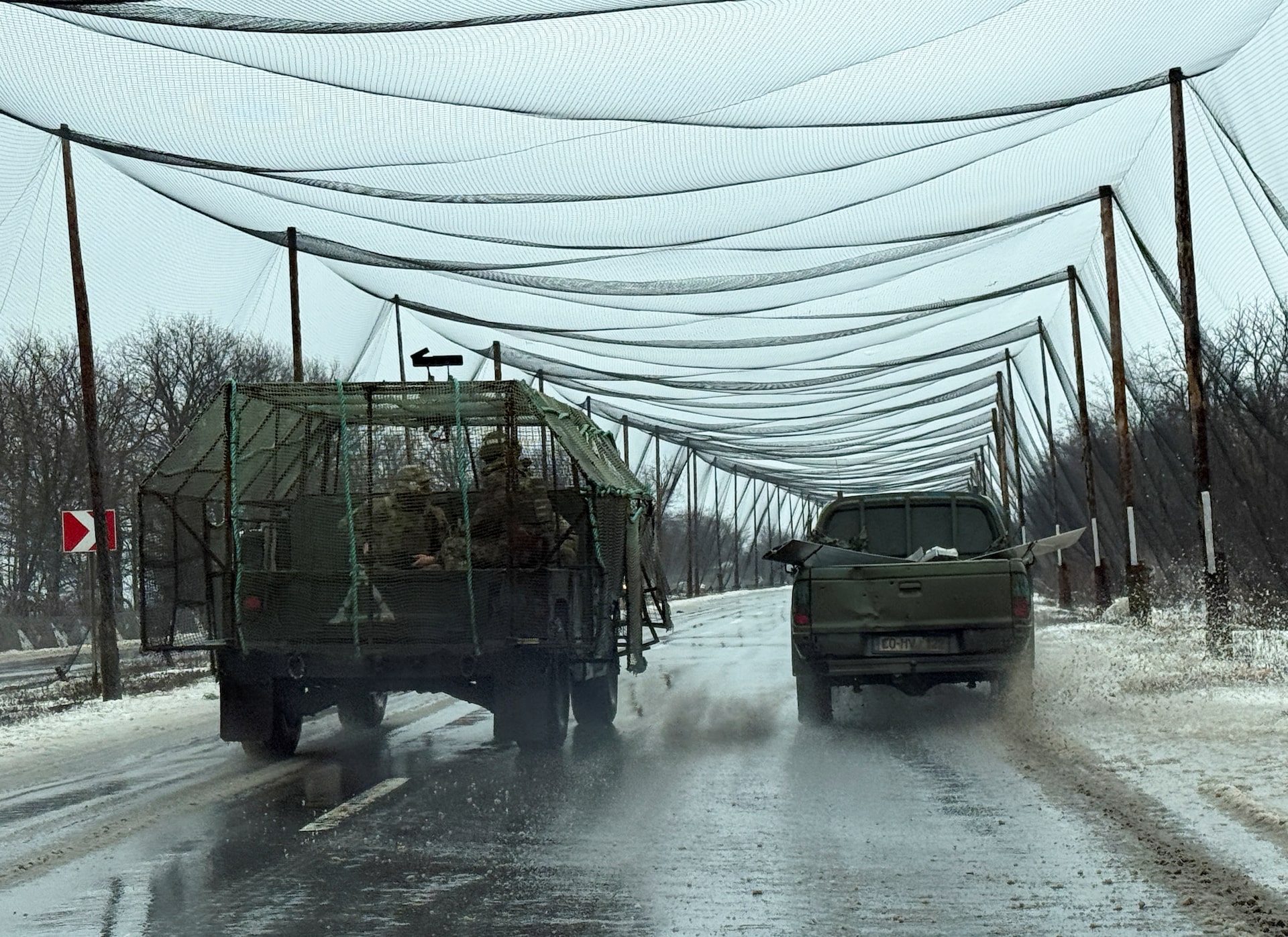
For established border crossings and fenced sections, anti-drone net systems integrate directly with existing barriers. Netting can be mounted on top of existing border fences (adding 6-10 meters of vertical coverage), suspended between existing observation towers, or installed as stand-alone barriers along gaps in natural terrain features.
Integration considerations include:
- Sensor fusion — connecting net-mounted impact sensors to existing C4ISR (Command, Control, Communications, Computers, Intelligence, Surveillance and Reconnaissance) systems
- Patrol access — designing gate and bypass sections that allow ground patrol vehicles and personnel to pass through without compromising coverage
- Maintenance corridors — ensuring service access for net inspection, repair, and replacement over the system lifetime (typically 10-15 years for steel, 5-8 years for aramid)
Can Border Security Drone Nets Withstand Extreme Weather?
Border environments subject security equipment to some of the most extreme weather conditions on earth — from the 50°C heat of the Sonoran Desert to the -40°C winters of the Korean DMZ, from monsoon rains along the India-Bangladesh border to salt-laden coastal winds in the Mediterranean. The question of weather resilience is critical for any border drone netting investment.
Modern physical net systems are engineered to withstand these conditions through careful material selection and structural design:
| Weather Challenge | Design Solution | Performance Standard |
|---|---|---|
| High winds (up to 160 km/h) | Aerodynamic mesh with 50-60% open area; load-rated support structures | No degradation at 120 km/h sustained; survival at 160 km/h gusts |
| UV radiation (desert regions) | UV-stabilized HDPE; aramid with UV-resistant coating | Less than 10% tensile strength loss over 5 years |
| Snow and ice accumulation | Non-stick coating; calculated load capacity for 50 cm snow depth | Self-shedding design; structural rating for 100 kg/m² snow load |
| Temperature extremes (-40°C to +60°C) | Thermally stable polymers; steel with proper thermal expansion gaps | Full mechanical performance across entire temperature range |
| Coastal salt corrosion | AISI 316 stainless steel; marine-grade aluminum fittings | 10-year corrosion warranty in coastal environments |
For permanent installations in extreme environments, stainless steel wire rope nets offer the highest durability, with service lives exceeding 15 years. Aramid fiber nets, while stronger weight-for-weight, typically require replacement every 5-8 years under continuous sun exposure unless protected with specialized UV coatings. HDPE nets offer an economical solution for temporary or seasonal deployments, lasting 3-5 years in moderate climates.
Routine maintenance is minimal — quarterly visual inspections for damage, annual tensioning adjustments, and replacement of any panels showing wear. This low maintenance burden makes border drone net systems particularly attractive for remote border sections where regular equipment servicing is logistically difficult and expensive.
Regulations Governing Anti-Drone Nets for Border Security
The regulatory landscape for border drone netting systems is notably more straightforward than for electronic countermeasures, because physical nets are passive structures that do not emit electromagnetic energy. This regulatory simplicity is a significant advantage for border security agencies navigating complex national and international legal frameworks.
Key regulatory considerations include:
- No spectrum licensing required — unlike RF jammers and GNSS spoofers, physical nets do not require approval from telecommunications regulators such as the FCC (USA), Ofcom (UK), or ANFR (France)
- Environmental impact assessment — border regions may have protected ecosystems or endangered species; net installations may require environmental review, particularly in national parks or wildlife corridors
- Bird strike mitigation — mesh apertures and colors must be designed to minimize impact on avian wildlife; many systems incorporate visual markers (UV-reflective strips) that are visible to birds but not humans
- Cross-border deployment agreements — when nets are installed directly on border lines, bilateral agreements may be needed between neighboring states
- International humanitarian law — as passive defensive barriers, anti-drone nets do not raise the same legal concerns as active countermeasures that could cause collateral damage
For border security agencies, the passive nature of physical nets means they can be deployed under existing border security mandates without additional legislative approval. This contrasts sharply with electronic counter-C-UAS systems, which in many countries require separate warrants or authorizations due to their potential to interfere with civilian communications, aviation, and emergency services.
The European Union has been particularly proactive in developing guidelines for C-UAS systems at external borders. Frontex maintains technical standards for anti-drone net for Schengen area border security deployments, ensuring that systems deployed at different member state borders meet consistent performance and safety criteria. Similarly, the GCC standardization organization has developed framework documents for counter-drone systems used across Gulf Cooperation Council member borders.
Agencies should consult with their national aviation authority and border security command regarding any specific restrictions on airspace obstruction near international boundary lines. In most jurisdictions, however, physical interception nets are classified as structural barriers rather than weapons systems, simplifying procurement and deployment procedures.
Border Security Anti-Drone Net Cost Considerations
Understanding the anti drone net cost for border-scale deployments is essential for agency budgeting and procurement planning. Unlike electronic systems that require ongoing software licenses, spectrum fees, and specialized operators, physical net systems offer predictable, up-front costs with minimal recurring expenses.
| Cost Component | Typical Range (USD) | Notes |
|---|---|---|
| Net material per linear meter (HDPE) | $50-120/m | 6m height, suitable for temporary deployment |
| Net material per linear meter (aramid) | $150-350/m | 6m height, military-grade interception |
| Net material per linear meter (stainless steel) | $200-500/m | 6m height, permanent installation, 15-year lifespan |
| Support structures (poles, cables, foundations) | $100-300/m | Site-dependent; remote locations increase cost |
| Installation and integration | $50-200/m | Includes site prep, sensor integration, testing |
| Annual maintenance | $10-30/m/year | Inspection, tensioning, minor repairs |
For a typical 1-kilometer border section with aramid nets and full integration:
Total installed cost: $250,000-$650,000
Annual maintenance: $10,000-$30,000
By comparison, a 1-kilometer electronic drone detection and jamming corridor typically costs $500,000-$1,500,000 to deploy and $100,000-$300,000 annually to operate (including personnel, spectrum fees, and software updates). The cost advantage of physical nets becomes even more pronounced over the 10-15 year lifecycle of a permanent installation.
When selecting an anti drone net supplier, agencies should evaluate:
- Track record with border security deployments specifically
- Warranty terms for material and workmanship (industry standard: 5-10 years for steel)
- Integration capabilities with existing border management systems
- Availability of rapid-response deployment teams for emergency installations
- Compliance with relevant national and international standards
For a detailed cost analysis tailored to your specific border section geography, threat profile, and deployment timeline, consulting with multiple anti drone net supplier organizations is recommended. Many leading anti drone defense companies offer free site assessment and preliminary cost estimates for border security projects.
Regional Border Security Applications
Border security anti-drone net deployments vary significantly by region, reflecting different threat profiles, terrain conditions, and regulatory frameworks. Here we examine several key regional applications:
Schengen Area Border Security
The European Union has identified drone smuggling as a growing threat to Schengen Area external borders. Anti-drone net for Schengen area border security deployments focus on the EU eastern borders (Poland-Ukraine, Greece-Turkey) and southern Mediterranean entry points. Frontex coordinates standardization efforts, ensuring that net systems deployed at different member state borders meet consistent interception and safety criteria. Schengen installations typically use aramid fiber nets for their combination of strength and ease of installation on existing border fence infrastructure.
GCC Border and Perimeter Security
Gulf Cooperation Council states face unique border security challenges, with extensive desert borders, critical oil infrastructure, and high-value urban centers near national boundaries. Anti-drone net for GCC border and perimeter security systems are primarily deployed along Saudi Arabia-Iraq and UAE-Oman borders, where drone-based smuggling and surveillance operations have been documented. Stainless steel wire rope nets are preferred in this region for their exceptional UV resistance and long service life in desert conditions, with many installations exceeding 10 years of operational service.
South Korea Military and DMZ Security
The Korean Demilitarized Zone represents one of the most heavily fortified borders in the world, where drone incursions from the North have been a persistent concern. Anti-drone net for South Korea military and DMZ security installations are integrated into the broader Korean Air Defense Identification Zone (KADIZ) architecture. South Korea has deployed specialized high-tensile stainless steel nets along key DMZ sections, capable of withstanding both small reconnaissance drones and larger military UAVs. These systems operate in extreme winter conditions where temperatures can drop to -40°C, requiring specially formulated steel alloys and low-temperature impact-resistant fittings.
Indian Airports and Border Security
India faces drone threats across its extensive land borders with Pakistan, China, Bangladesh, and Myanmar, as well as cross-border infiltration via the Pakistan-India border in Kashmir. Anti-drone net for Indian airports and border security programs have expanded significantly, with the Bureau of Civil Aviation Security (BCAS) mandating C-UAS protection at major international airports and the Border Security Force (BSF) deploying physical netting along sensitive border sections in Punjab, Jammu & Kashmir, and the Northeast. Indian deployments favor hybrid systems — aramid nets at high-priority border crossings supplemented by electronic detection along longer, less accessible border stretches.
OpenWorks Engineering: C-UAS, Air Defence and Surveillance represents one of several specialized providers that have developed border-specific anti-drone net solutions. When evaluating suppliers, agencies should seek those with demonstrated experience in their specific regional context, as terrain, climate, and regulatory factors significantly influence system design and deployment strategy.
Conclusion
Border anti-drone netting has emerged as an indispensable component of national border protection strategies worldwide. As drone technology continues to advance and become more accessible to both criminal organizations and hostile actors, the need for reliable, regulation-friendly physical countermeasures has never been greater.
Physical interception nets offer border security agencies a unique combination of advantages that electronic countermeasures cannot match:
- Assured interception that cannot be jammed, spoofed, or electronically evaded
- Full preservation of drone and payload for intelligence gathering and prosecution
- No spectrum licensing or regulatory approval barriers
- Predictable, low lifecycle costs compared to active electronic systems
- Proven effectiveness across diverse climates — from Arctic borders to desert frontiers
For agencies evaluating border security anti-drone net for drone surveillance prevention and smuggling interdiction, the path forward is clear: integrate physical net barriers as the backbone of a layered border defense strategy, supported by electronic detection for early warning and real-time monitoring. Whether protecting the Schengen Area external border, the Korean DMZ, GCC frontiers, or the India-Pakistan border, anti-drone nets provide the reliable, regulatory-compliant, and cost-effective solution that modern border security demands.
Border control drone net for airspace violation prevention represents not just a technology choice but a strategic investment in national sovereignty. To learn more about border-specific anti-drone net systems, specifications, and deployment planning, contact our team for a consultation tailored to your border security requirements.